
Welcome to 2026 International Conference on Interdisciplinary
Innovations in Computing and Society (ICIICS2026)
Welcome to the 2026 International Conference on Interdisciplinary Innovations in Computing and Society (ICIICS2026), proudly hosted by Athabasca University. This annual conference traces its roots back to 2022, when the Telepresence Robot Empowered Smart Lab (TRESL) was launched as a collaborative research initiative between Athabasca University and the University of Oviedo. What began as a focused effort to support virtual collaboration and remote experimentation has since evolved into a dynamic platform for interdisciplinary innovation.
ICIICS brings together a diverse community of scholars, students, industry professionals, and community leaders to explore the intersections of technology and society. This conference is more than an academic gathering—it is a collaborative space where ideas ignite, disciplines converge, and innovative solutions emerge. As we navigate the rapidly evolving digital landscape, ICIICS 2026 invites you to engage in meaningful dialogue, share transformative research, and build strategic partnerships that drive positive change in areas such as education, healthcare, environmental sustainability, and rural development. We are especially excited to highlight student-led innovation, cross-sector collaborations, and the vital role of emerging technologies in shaping a resilient and inclusive future. Welcome to this vibrant community of change-makers—we’re glad you’re here.

Visit one of Canada’s best online institutions and Alberta’s natural landscapes
AU is Canada’s Online University, offering open and flexible distance learning with world-class online courses, undergraduate and graduate degree programs, and professional development options
Innovating Remote Access to Hands-On in Distance Education
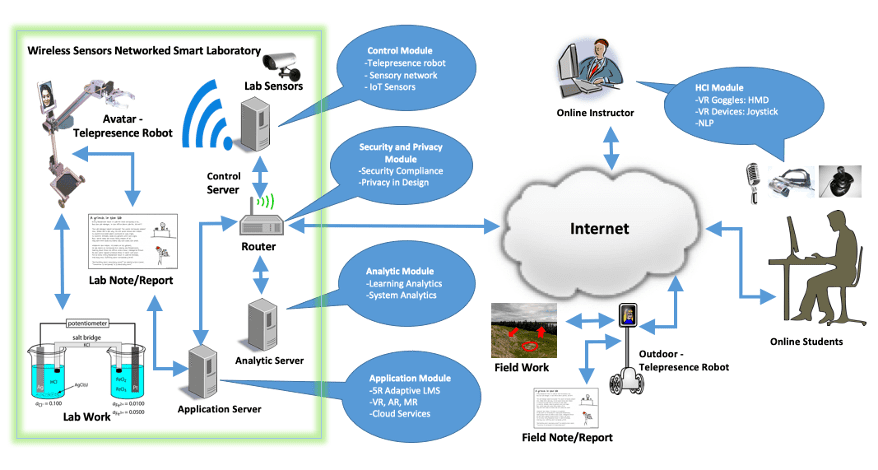
A conceptual diagram of the TRESL architecture highlighting telepresence interaction between remote users and the Smart Lab environment. This includes robot control, sensor integration, and intelligent feedback loops to support learning and experimentation.
Telepresence Robot Empowered Smart Lab (TRESL)
The Telepresence Robot Empowered Smart Lab (TRESL) at Athabasca University is a pioneering research program dedicated to transforming how hands-on lab and field work are conducted in distance education. Since its launch in 2014, TRESL has developed an innovative system architecture that empowers online learners to remotely interact with real laboratory environments using telepresence robots—robotic avatars that extend the students’ ability to “Be There” and “Act There” from anywhere in the world.
Designed to address the long-standing challenges of science and engineering education in remote contexts, TRESL blends cutting-edge technologies including cyber-physical systems, robotics, IoT, AI, and immersive human-computer interaction. Through affordable and adaptable robotic platforms, learners can navigate, observe, and manipulate lab instruments in real-time, gaining practical experience comparable to in-person labs.
TRESL has produced numerous peer-reviewed publications in JCR and Scopus-indexed journals as well as conferences, supported the graduation of multiple PhD and master’s students, and inspired international collaborations. Its pedagogical framework supports independent, collaborative, and blended learning models, ensuring high-quality, inclusive access to experiential education.
Conference Highlights:
Interactive Research Presentation:
Featuring the PhD and MScIS students from Athabasca University and University of Oviedo showcasing research in Telepresence Robot Empowered Smart Lab (TRESL) and Computing and Information Systems
Keynote Speeches & Expert Panel Discussions:
International and national scholars and experts, alongside AU faculty, will explore the impact of AI on education, management, and governance
Student Innovation Spotlight:
Presenting the research projects and innovative activities including AU students who competed in the 2026 Aerial Evolution Association of Canada’s Unmanned Systems Student Competition
Everyone is welcome! Whether you’re a researcher, student, entrepreneur, policymaker, or community leader, IIRC 2026 offers a unique opportunity to connect, collaborate, and co-create solutions for a better future.
Invalid video URL. Only videos from youtube or vimeo are allowed, based on your video type
The image generated by Easy-peasy.ai
THEMES, TOPICS, AND SUBMISSIONS
The Conference Themes and Topics:
Theme of interest:
Information Systems, Health Studies, Distance Education, and social impact of advanced computing and information technologies.
Submissions:
Graduate-level papers are welcomed until July 15, 2026. Papers should be formatted using the IEEE Manuscript Template, and submitted the links below.
All submissions should report original and previous research results no matter the type of research paper you are presenting. Full text papers (.docx and .doc) will be accepted by Electronic Submission Form. Posters (.pdf, .ppt). Manuscripts should meet the format set by the Conference committee and are subject to review.
Main Themes
Cyber-Physical Systems, AI & Robotics
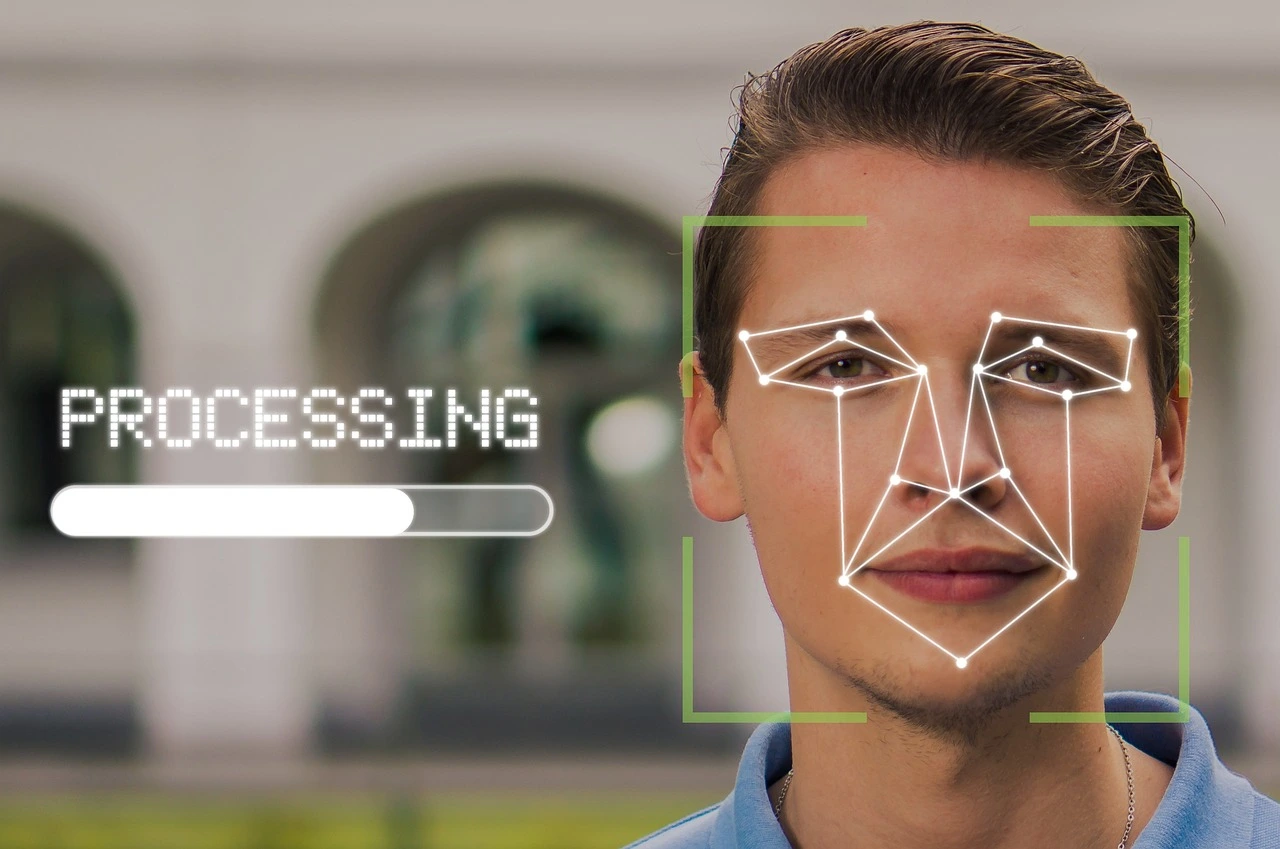
Speech Emotion Recognition

Distance Education & Blockchain Technologies
Cyber-Physical Systems
Cyber-physical systems (CPS) integrate sensing, computation, control and networking into physical objects and infrastructure, connecting them to the Internet and to each other.


AI in Healthcare and Health Informatics
This theme focuses on the application of artificial intelligence, data science, and digital technologies to address contemporary challenges in healthcare and health systems. It provides a multidisciplinary forum for researchers, healthcare professionals, practitioners, and policymakers to share advances in health informatics, medical data analytics, clinical decision support, digital health, telehealth, personalized medicine, and responsible AI in healthcare. The theme aims to foster collaboration and knowledge exchange on innovative approaches that enhance healthcare delivery, improve patient outcomes, support evidence-based decision-making, and contribute to the development of sustainable and equitable health systems.
Advisory Board
Prof. Shauna Zenteno
Dean, Faculty of Science & Technology
Athabasca University
Prof. Dunwei Wen
Chair of School of Computing and Information Systems, FST, Athabasca Univeristy
Ms. Joelle Jackson
Asst. to the Dean, Faculty of Science & Technology, Athabasca Univeristy
Advisory Committee

Prof. José Ramon Villar
Dept. Computer Science
University of Oviedo

Prof. Enrique De La Cal Marín
Dept. Computer Science
University of Oviedo

Prof. Frédérique Pivot
Faculty of Science & Technology
Athabasca University

Prof. Roland Treu
Faculty of Science & Technology
Athabasca University

Prof. Harris Wang
Faculty of Science & Technology
Athabasca University

Prof. Xiaokun Zhang
Faculty of Science & Technology
Athabasca University
Organizers
Prof. Qing Tan
Faculty of Science & Technology
Athabasca University
Samson Mihirette
Phd. Candidate
University of Oviedo
Prof. Frédérique Pivot
Faculty of Science & Technology
Athabasca University
Nikki Pawlitschek, M.A.
Counsellor, Counselling Services
Athabasca University
Prof. Connie (Levina) Yuen
Faculty of Science & Technology
Athabasca University
Dr. Nick Jeffry
Phd. Computer Science
University of Oviedo
Alyse Pearce, M.Ed
Research Services
Athabasca University
Our Sponsors & Collaborators
Thank you to our sponsors and collaborators.